
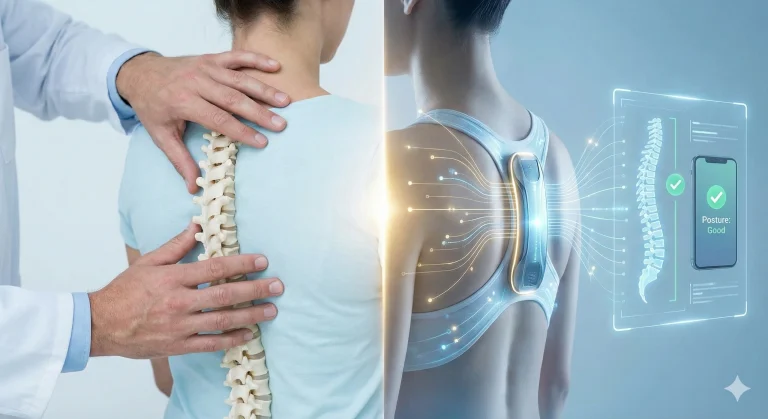
In recent years, wearable technology has transformed from simple step counters into sophisticated health monitoring systems. For chiropractors and their patients, this evolution represents a remarkable opportunity to address one of modern life's most persistent challenges: poor posture. Smart devices that track posture and activity are creating new pathways for treatment, enabling chiropractors to monitor patient progress between visits and make more informed adjustments to care plans.

The Modern Posture Crisis
Before diving into the technology, it’s worth understanding why posture correction has become such a critical concern. The average person now spends over seven hours per day looking at screens, whether working at a computer, scrolling on a smartphone, or watching television. This sedentary, forward-leaning lifestyle has created an epidemic of what some healthcare professionals call “tech neck” and rounded shoulder syndrome.
Traditional chiropractic care has always addressed these issues through spinal adjustments, exercises, and patient education. However, chiropractors have historically faced a significant limitation: they only see patients for brief appointments, usually once or twice per week. What happens during the other 166 hours of the week has remained largely a mystery, relying on patient self-reporting, which can be unreliable or incomplete.
Enter Wearable Posture Technology
Wearable posture devices are changing this dynamic entirely. These smart sensors, which can be worn on the upper back, clipped to clothing, or integrated into everyday items like shirts, continuously monitor body position throughout the day. Using accelerometers, gyroscopes, and sophisticated algorithms, they detect when a person slouches, tilts their head forward excessively, or maintains poor posture for extended periods.
The technology works by establishing a baseline of proper posture for each individual user. Once calibrated, the device provides real-time feedback through gentle vibrations or smartphone notifications when posture deviates from the ideal position. This immediate feedback creates a powerful learning mechanism, helping patients develop better postural awareness and habits.
Real-Time Data for Better Treatment Decisions
For chiropractors, the real game-changer isn’t just that patients receive reminders to sit up straight. It’s the wealth of objective data these devices generate. Modern wearable posture trackers can provide detailed reports showing exactly how many hours per day a patient maintains proper alignment, which times of day they struggle most with posture, and how their habits change over weeks and months.
This information allows chiropractors to make evidence-based adjustments to treatment plans. For example, if data shows a patient’s posture deteriorates significantly during afternoon work hours, a chiropractor might recommend specific stretches or exercises timed for midday breaks. If someone consistently struggles with posture while using their smartphone, the chiropractor can provide targeted coaching on device ergonomics.
The data also helps identify patterns that might not be obvious during in-office assessments. A patient might report that their neck pain is worst in the mornings, but wearable data could reveal that they spend excessive time in poor posture during evening activities, with the cumulative effect manifesting the following day.
Enhancing Patient Accountability and Engagement
One of the biggest challenges in any healthcare setting is patient compliance with recommended exercises and lifestyle modifications. Wearable technology addresses this by making posture correction feel less like homework and more like an engaging challenge.
Many posture-tracking devices include gamification elements, setting daily goals, tracking streaks of good posture days, and providing achievement badges. This approach taps into the same psychological principles that make fitness trackers so popular. Patients become active participants in their own care rather than passive recipients of treatment.
Additionally, knowing that their chiropractor will review the data during the next appointment creates a gentle accountability structure. Patients are more likely to pay attention to their posture when they know objective measurements are being recorded.

Integration with Comprehensive Treatment Plans
The most forward-thinking chiropractic practices are integrating wearable technology data with other assessment tools to create comprehensive treatment approaches. When posture data is combined with information from digital X-rays, range of motion tests, and patient-reported pain levels, chiropractors gain a multidimensional understanding of each patient’s condition.
This holistic view enables more personalized care. Two patients might both suffer from cervical spine misalignment, but if their posture data reveals different behavioral patterns, their treatment plans should reflect those differences. One might need more aggressive manual adjustments combined with intensive posture retraining, while another might benefit from a gentler approach focused on ergonomic modifications and gradual habit change.
Tracking Long-Term Progress
Beyond day-to-day monitoring, wearable technology excels at documenting long-term trends. Chiropractors can review data spanning months to see whether interventions are producing lasting change. This longitudinal perspective is invaluable for demonstrating treatment effectiveness, both to patients and to insurance providers who increasingly demand evidence-based outcomes.
Seeing concrete proof of improvement can be incredibly motivating for patients. A graph showing steady increases in good posture hours over a three-month period provides tangible evidence that the effort they’re putting into exercises and adjustments is paying off. Conversely, if data shows stagnation or regression, it prompts important conversations about barriers to progress and potential modifications to the treatment approach.
e well-fed with fibre, they produce short-chain fatty acids, particularly butyrate, which has powerful anti-inflammatory properties. These compounds help reduce inflammation not just in your gut, but throughout your entire body, including the tissues around your spine.
Most people need 25-35 grams of fibre daily, but it’s important to increase your intake gradually to avoid digestive discomfort. Focus on whole foods like vegetables, fruits, legumes, whole grains, nuts, and seeds. The diversity of fibre sources is just as important as the quantity—different types of fibre feed different bacterial species, so eating a varied diet promotes a more diverse and resilient microbiome.
Practical Considerations and Limitations
While wearable posture technology offers tremendous benefits, it’s important to acknowledge some practical considerations. Not all patients will be comfortable wearing devices throughout the day, and the technology requires a certain level of digital literacy to use effectively. Cost can also be a barrier, though prices have decreased as the technology has become more widespread.
Additionally, chiropractors should view wearable data as one tool among many, not a replacement for hands-on assessment and clinical judgment. Technology can measure position and movement, but it cannot capture the full picture of a patient’s pain, function, or quality of life.
The Future of Tech-Enabled Chiropractic Care
As wearable technology continues to evolve, its applications in chiropractic care will likely expand. Future devices may incorporate muscle tension sensors, provide more sophisticated movement analysis, or use artificial intelligence to predict when adjustments might be needed before symptoms become severe.
The integration of wearable technology into chiropractic practice represents a significant step forward in addressing the postural challenges of modern life. By providing continuous monitoring, objective data, and real-time feedback, these smart devices empower both chiropractors and patients to work together more effectively toward lasting improvements in spinal health and overall wellbeing.
Dr. Erin Madonia has been providing chiropractic care to the King West neighbourhood since 2014, specializing in safe and effective relief of spinal complaints while optimizing central nervous system function. To learn more or schedule an appointment, contact us at dr.erin.madonia@gmail.com or visit our office at 130 Spadina Ave, Suite 808, Toronto.