
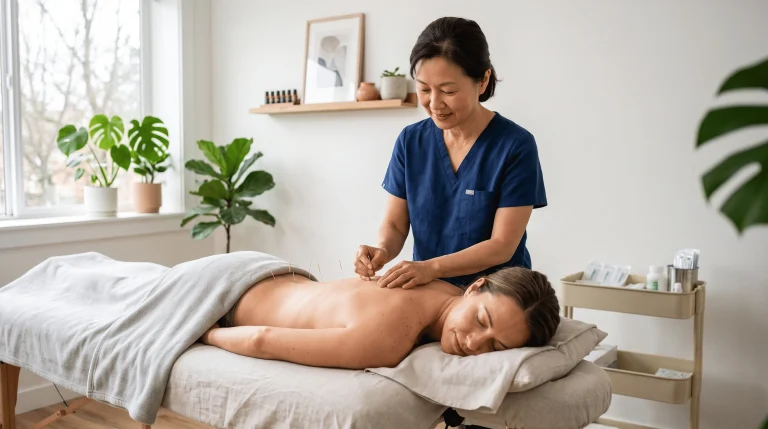
Low Back Pain? Why Acupuncture Is Worth Considering
Low back pain is one of the most common reasons people seek healthcare, and it’s one of the conditions I frequently see in my practice. For many people, it can affect work performance, sleep, physical activity, and overall quality of life.
Most low back pain is not caused by a serious injury. In fact, it often results from a combination of muscle tension, reduced movement, stress, poor sleep, repetitive strain, and other lifestyle factors. This is why there is rarely a single “quick fix” and why an individualized approach can make a meaningful difference.
Symptoms of low back pain may include:
Aching, sharp, burning, or dull pain
Stiffness, especially after sitting or lying down for long periods
Muscle tightness in the lower back, hips, or glutes
Pain that changes with movement, posture, activity, or rest
Reduced mobility or difficulty with daily activities
Pain that may extend into the glutes or legs
While these symptoms describe how low back pain presents, TCM looks deeper into the unique patterns behind them. The quality of the pain, what aggravates or relieves it, and the person’s overall health picture all help guide an individualized treatment approach.
How TCM Understands Low Back Pain
Traditional Chinese Medicine (TCM) looks beyond where the pain is located to distinguish between the root and the branch. The root is the underlying pattern contributing to the condition, while the branch refers to how it presents in the body.
A TCM assessment considers your overall pattern of health. During your treatment, your practitioner will likely ask about your stress levels, sleep quality, digestion, energy, activity level, previous injuries, and other seemingly unrelated symptoms. These details help identify patterns that guide treatment.
In TCM, low back pain is understood through patterns of imbalance, such as disruptions in the flow of Qi and Blood, or patterns involving the body’s functional systems. The Kidney system, in particular, is traditionally associated with the health and strength of the lower back. These traditional concepts differ from biomedical diagnoses, but they provide a framework for delivering individualized care.
This means that two people with similar back pain may receive different acupuncture treatments based on their unique presentation.
What the Evidence Says About Acupuncture’s Effectiveness for Low Back Pain
Acupuncture is one of the most extensively researched non-drug treatments for low back pain. Hundreds of clinical trials and numerous systematic reviews have evaluated its effectiveness. Research suggests acupuncture can reduce pain and improve function in both acute and chronic low back pain, with the strongest and most consistent evidence supporting its use for chronic low back pain. As a result, acupuncture is included as a treatment option in several national and international clinical practice guidelines, including those from the American College of Physicians. In Canada, acupuncture is recognized as an evidence-informed, non-drug treatment option for low back pain.
Research shows that acupuncture influences pain regulation by acting on the nervous system, stimulating the body’s natural pain-relieving chemicals (such as endorphins), and reducing pain sensitivity. Although these mechanisms differ from the traditional TCM concepts of Qi and Blood, they help explain why acupuncture can be beneficial for low back pain from a biomedical perspective.
Acupuncture Offers More Than Pain Relief
Beyond pain relief, acupuncture can help support the recovery process.
When pain is reduced, even modestly, people often find it easier to exercise, return to activities they enjoy, and break the cycle of pain, stiffness, and inactivity. Acupuncture is most effective when it is part of a comprehensive plan that includes movement, strength training, restorative sleep, stress management, and understanding the root cause contributing to your low back pain.
Research also shows that acupuncture influences autonomic nervous system activity, helping regulate the balance between sympathetic (“fight or flight”) and parasympathetic (“rest and digest”) responses. Regular treatments can help regulate the body’s stress response over time, which may help explain why many people experience a sense of calm after treatment and why acupuncture can support recovery beyond pain relief alone.
Is Acupuncture Worth Exploring?
No single treatment works for everyone, but for people with persistent or recurring low back pain, acupuncture offers a safe, evidence-informed option that can help reduce pain and improve function.
In my clinical practice, some people experience immediate, noticeable pain relief while for others improvement is more gradual. This reflects the TCM principle of treating both the root and branch: the symptoms you are experiencing and the underlying patterns that may be contributing to them.
The goal of acupuncture is not simply to reduce pain, but to support recovery, improve function, and help you move with greater confidence and return to the activities that matter most.
If you’re curious whether acupuncture is right for you, I’d love to help.
Please reach out to me with your questions, or book your appointment with me here.
Lien Pham, R.Ac
Registered Acupuncturist | 130 Spadina Ave., Suite 808, Downtown Toronto | Dr. Erin Madonia Family Chiropractic
Dr. Erin Madonia has been providing chiropractic care to the King West neighbourhood since 2014, specializing in safe and effective relief of spinal complaints while optimizing central nervous system function. To learn more or schedule an appointment, contact us at dr.erin.madonia@gmail.com or visit our office at 130 Spadina Ave, Suite 808, Toronto.
For more information, you can book a free consultation or schedule an appointment with us by clicking the buttons down below 👇
References & Additional Reading
World Health Organization Guideline on Chronic Low Back Pain
World Health Organization. 2023.
Evidence-based recommendations for managing chronic low back pain, including non-surgical treatment approaches such as acupuncture.
Neural Mechanism Underlying Acupuncture Analgesia
Zhao ZQ. Progress in Neurobiology. 2008;85(4):355–375.
A review of the neurophysiological mechanisms involved in acupuncture analgesia, including modulation of pain sensitivity and activation of endogenous pain-relieving pathways.
American College of Physicians Clinical Practice Guideline: Noninvasive Treatments for Acute, Subacute, and Chronic Low Back Pain
Qaseem A, Wilt TJ, McLean RM, Forciea MA. Annals of Internal Medicine. 2017.
This guideline includes acupuncture among non-drug treatment options that may be considered for chronic low back pain.
The Foundations of Chinese Medicine: A Comprehensive Text for Acupuncturists and Herbalists
Maciocia G. 3rd Edition. Elsevier, 2015.
A foundational reference exploring TCM theory, including pattern differentiation, Qi and Blood concepts, and individualized treatment approaches for pain conditions.