
Paraspinal Tenderness: What It Means and When to See a Chiropractor
Maybe you read the words “paraspinal tenderness” on a medical report, or felt a sore spot when someone pressed beside your spine. The phrase sounds alarming, but it is one of the most common findings in a back or neck exam. Knowing what paraspinal tenderness means, and what it doesn’t, can help you decide what to do next and when it is time to have it properly assessed.
What Is Paraspinal Tenderness?
Paraspinal tenderness is pain or soreness that appears when pressure is applied to the muscles running alongside your spine. “Para” means beside, so the term simply describes where the tenderness is. These muscles, which we explain in our guide to the paraspinal muscles, run from the base of your skull to your pelvis. They keep you upright, help you bend and twist, and protect your spine.
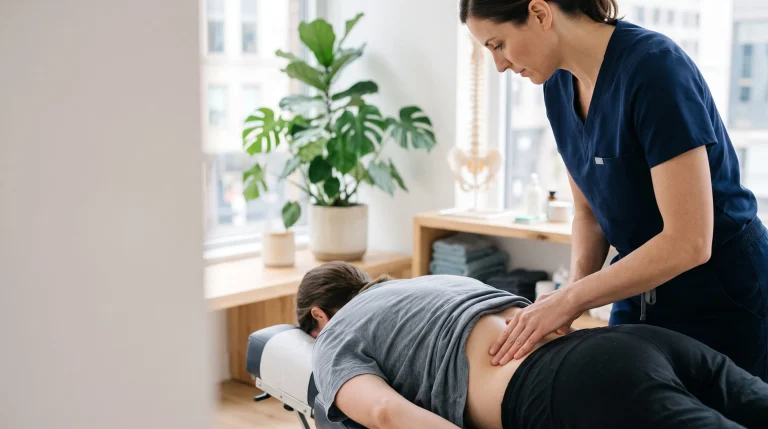
Here is the key point: tenderness is a finding, not a diagnosis. When a chiropractor, physician or physiotherapist writes “paraspinal muscle tenderness” or “paravertebral tenderness” in your chart, they are recording what they felt during palpation, the hands-on part of the exam. It tells us the tissue is irritated. On its own, it does not tell us why.
Where It Shows Up: Neck, Mid-Back and Low Back
- Cervical (neck): often linked to forward head posture, long screen time, stress or whiplash. It commonly comes with headaches or stiffness when turning your head.
- Thoracic (mid-back): frequently tied to desk posture and rounded shoulders. It often feels like a knot between the shoulder blades.
- Lumbar paraspinal tenderness (low back): the most common type. Lifting, prolonged sitting and weak core support overload these muscles, and the soreness often gets worse after long periods in a chair.
Tenderness on only one side usually points to an uneven load, such as carrying a bag on the same shoulder every day (see our tips on how to wear a bag), a habitual sleeping position, or a sport that rotates you one way.
Common Causes of Paraspinal Tenderness
- Muscle strain: overstretching or small tears from lifting, a sudden twist or a new workout.
- Protective guarding: when a spinal joint is irritated, the surrounding muscles tighten to protect it. Ongoing guarding can develop into a full paraspinal muscle spasm.
- Trigger points: tight, irritable knots that are sore to the touch and may refer pain elsewhere.
- Joint dysfunction: restricted or irritated facet joints often show up as local muscle tenderness over the affected segment.
- Postural overload: hours at a desk or on a phone keep the same muscles working without a break. Small changes, like better standing desk ergonomics, make a real difference.
- Disc or nerve irritation: sometimes tenderness sits on top of a deeper issue, especially if you also feel pain, tingling or numbness travelling down an arm or leg.
Most cases are mechanical and respond well to the right care. Paraspinal tenderness does not automatically mean a slipped disc, arthritis or permanent damage, and imaging is rarely needed at first. A thorough history and physical exam usually explain where it is coming from.
Red Flags: When to Seek Medical Care First
See a physician or go to the emergency department promptly if back tenderness comes with any of the following:
- Fever, chills or feeling generally unwell
- Unexplained weight loss or a history of cancer
- Pain after a significant fall or car accident
- Loss of bladder or bowel control, or numbness in the groin or inner thighs
- Progressive weakness in the arms or legs
- Severe night pain that doesn’t change with position
These situations are uncommon, but they need medical evaluation before any hands-on treatment.
When to See a Chiropractor for Paraspinal Tenderness
Consider booking an assessment if:
- The tenderness has lasted longer than one to two weeks
- It keeps coming back in the same spot
- It limits your sleep, work, workouts or ability to bend and turn
- You also have stiffness, headaches, or pain spreading into your arms or legs
- A doctor’s report mentioned paraspinal tenderness and you want a plan to address it
Early care usually means fewer visits. When muscles guard for months, the pattern becomes harder to change.
How a Chiropractor Assesses and Treats It
At our downtown Toronto chiropractic clinic, we start by finding the source. Your first visit includes a detailed health history, a posture and movement assessment, orthopedic and neurological testing, and careful palpation of the spine and paraspinal muscles.
Treatment is tailored to what we find and may include:
- Spinal adjustments to restore motion to restricted joints, so the muscles no longer need to guard.
- Soft tissue therapy to release trigger points and tight bands of muscle.
- Acupuncture for stubborn tension and pain relief. Learn how acupuncture and chiropractic work together.
- Rehabilitation exercises and posture coaching so the tenderness doesn’t keep returning.
If nerve irritation is part of the picture, we may add gentle mobility drills such as nerve flossing
Simple Self-Care While You Wait
- Keep moving gently. Short walks are better than bed rest.
- Use heat for 15 to 20 minutes on tight muscles, or ice on a fresh strain during the first 48 hours.
- Break up sitting every 30 to 45 minutes.
- Skip deep, aggressive pressure on a very tender spot. Pressing harder rarely fixes it faster.
Is your back locking up? Get it assessed in King West, Toronto.
Frequently Asked Questions
What does paraspinal tenderness mean on a medical report?
It means the examiner found soreness when pressing on the muscles beside your spine. It describes irritated tissue, not a specific diagnosis.
Is paraspinal tenderness serious?
Usually not. Most cases come from muscle strain, joint irritation or posture. It needs urgent attention only when combined with red flags such as fever, weakness or changes in bladder control.
How long does paraspinal tenderness last?
Mild cases often settle within a few days to two weeks. Tenderness that lasts longer, or keeps returning, suggests an underlying mechanical problem worth assessing.
Is paraspinal tenderness the same as a muscle spasm?
No. Tenderness is soreness to the touch, while a spasm is an involuntary muscle contraction. A spasm usually causes tenderness, but tenderness can exist without a spasm.
Can a chiropractor help with lumbar paraspinal tenderness?
Yes. Chiropractic care addresses the joint restriction, muscle guarding and daily habits that keep the low back muscles irritated.
Dr. Erin Madonia has been providing chiropractic care to the King West neighbourhood since 2014, specializing in safe and effective relief of spinal complaints while optimizing central nervous system function. To learn more or schedule an appointment, contact us at dr.erin.madonia@gmail.com or visit our office at 130 Spadina Ave, Suite 808, Toronto.